
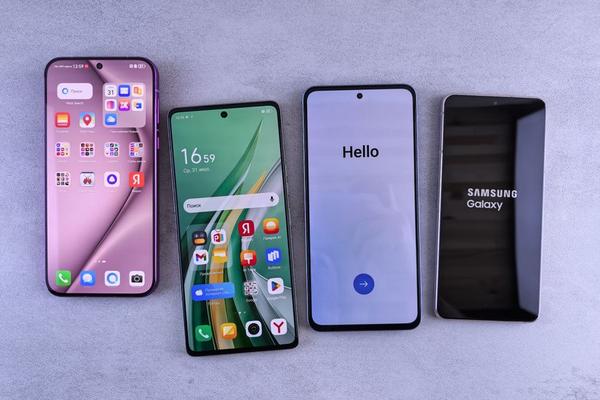
The mid-range Android market in 2026 is no longer about accepting obvious compromises just to save money. Around the $500-to-$650 mark, buyers can get bright high-refresh OLED displays, large batteries, strong cameras, long software support and, in some cases, near-flagship performance. These phones sit above strict budget models and suit people who want a device they can keep for several years without paying premium flagship prices.
There is no single best choice for everyone. Some mid-range Android 2026 models prioritise photography and clean software, while others focus on battery life, gaming power or premium design. The four phones below stand out because each has a clear strength rather than simply looking good on a specification sheet.
Google Pixel 10a: the best all-round choice
Google’s Pixel 10a is the easiest recommendation for buyers who care about camera consistency, straightforward software and long-term value. It starts at $499 in the US and uses a compact 6.3-inch pOLED display with a 60-120Hz refresh rate. That smaller size is increasingly unusual in a market dominated by 6.7-inch and larger phones.
The Pixel 10a combines a 48MP main camera with a 13MP ultrawide, and Google’s computational photography is a major part of the appeal. It is less about having the most lenses and more about reliably getting a good photo without adjusting settings. The 5,100mAh battery is practical, while Qi wireless charging is a feature several rivals at this price still omit.
Its Tensor G4 processor is not the obvious choice for demanding mobile gamers, but for everyday apps, photography, navigation and casual games it provides a balanced experience. If your idea of the best value Android phone is one that feels polished every day rather than winning benchmark charts, the Pixel 10a is the strongest starting point.
Samsung Galaxy A57 5G: best for long support
The Galaxy A57 5G is the safer pick for buyers already comfortable with Samsung’s One UI. Its 6.7-inch FHD+ Super AMOLED Plus display runs at up to 120Hz, while the phone is only 6.9mm thick and weighs about 179g. That combination makes it feel more refined than many large mid-range phones.
Samsung pairs a 50MP main camera with a 12MP ultrawide and 5MP macro camera. A 5,000mAh battery and up to 45W wired charging cover the basics well, while IP68 water and dust resistance adds reassurance. Samsung also promises up to six operating-system upgrades and six years of security updates.
That support window matters if you normally keep a phone for four or five years. The A57 may not be the fastest device in this group, but its screen, build, software policy and ecosystem make it a sensible affordable Android flagship alternative for buyers who value predictability.
OnePlus 15R: best for performance and battery life
The OnePlus 15R pushes the upper edge of the mid-range category, but it earns its place with hardware that would have looked unmistakably flagship-class not long ago. It uses Qualcomm’s Snapdragon 8 Gen 5 platform, 12GB of LPDDR5X memory and UFS 4.1 storage, making it the strongest option here for gaming, heavier multitasking and demanding apps.
The 6.83-inch display can reach up to 165Hz in supported situations, and the 7,400mAh battery is unusually large even by 2026 standards. OnePlus also supports up to 80W charging with compatible hardware. The trade-off is size: at more than 214g, this is not the phone for someone who wants a light, compact device.
Its 50MP OIS main camera is capable, but photography-first buyers may still prefer the Pixel. Think of the 15R as the mid-ranger for people who might otherwise buy a gaming-oriented flagship. For a student commuting all day, for example, the large battery can matter more than a telephoto lens when the phone is also handling streaming, hotspot duty and evening gaming.
Nothing Phone (4a) Pro: best for distinctive design
Nothing’s Phone (4a) Pro is the more distinctive choice. It combines an aluminium unibody with the company’s transparent-influenced styling and Glyph Matrix notification system. The 6.83-inch 1.5K AMOLED display supports an adaptive refresh rate up to 144Hz, while the Snapdragon 7 Gen 4 provides solid mid-range performance.
The phone also brings a three-camera system, a 5,080mAh battery in most markets and 50W charging. Its IP65 rating is useful, although it offers less water protection than the Galaxy A57’s IP68 rating. Nothing promises three years of OS updates and six years of security updates, so long-term owners should weigh that against Samsung’s longer OS-upgrade commitment.
The Phone (4a) Pro makes most sense for someone who wants personality and a clean-feeling interface without true flagship pricing. It offers a genuinely different experience rather than another variation on the same formula.
How to choose the right mid-range Android phone
Start with the feature you will notice every day. Choose the Pixel 10a if camera reliability and compact dimensions come first. Pick the Galaxy A57 if a large display, IP68 protection and long software support matter more. The OnePlus 15R is the performance-and-battery choice, while the Nothing Phone (4a) Pro suits buyers who care about design and interface personality.
Compare the final street price rather than the launch price because mid-range phones are discounted frequently. If a 256GB model costs only slightly more than a 128GB version, the larger storage option is usually the better long-term buy. For shoppers with a tighter ceiling, our budget Android phones under $300 guide is the more useful comparison. Buyers focused on endurance may also want to compare our Android phone battery life guide, while camera-first shoppers can use our smartphone camera comparison guide.
Frequently asked questions
What is considered a mid-range Android phone in 2026?
There is no universal price boundary, but the broad middle tier generally sits above basic budget phones and below premium flagships. Many strong options cluster around roughly $450 to $650, depending on market, storage and promotions.
Which mid-range Android phone has the best camera?
For most point-and-shoot users, the Pixel 10a is the safest camera-focused pick because Google’s image processing prioritises consistent results. Buyers who want specific zoom or video features should compare individual camera systems before purchasing.
Which model is best for gaming?
The OnePlus 15R is the strongest gaming choice here thanks to its Snapdragon 8 Gen 5 chipset, fast memory and storage, high-refresh display and very large battery.
Should I buy a discounted older flagship instead?
Sometimes. An older flagship can offer a better camera system or premium extras, but check battery condition, remaining software support and storage. A new mid-ranger with a fresh battery and longer update runway can be the smarter ownership choice.
Final verdict
The best mid-range Android phones of 2026 are good enough that the decision is now about priorities, not basic compromises. The Pixel 10a is the most balanced option, the Galaxy A57 is excellent for long-term mainstream use, the OnePlus 15R delivers the most performance and battery capacity, and the Nothing Phone (4a) Pro brings the most distinctive design. Match those strengths to how you actually use your phone and you can get close to flagship quality without paying flagship-level money.