
Broadband internet is the always-on connection that lets a household stream video, join calls, browse websites, and use several devices without dialling in each time. But “broadband” describes a category of internet access, not one particular cable or guaranteed speed. A fibre connection and a rural wireless service can both be broadband while performing very differently.
To understand what is broadband internet, it helps to separate three questions: how the connection reaches your property, how much data it can carry, and how reliably it works.
What Does Broadband Internet Mean?
Broadband is high-capacity internet access that transfers data over a wired or wireless network. Compared with old dial-up connections, broadband is designed for faster, continuous access. Your internet service provider, or ISP, supplies the connection, usually through a monthly plan.
The word does not have one worldwide minimum speed. Regulators use different benchmarks for different purposes. In the United States, the Federal Communications Commission retained a benchmark of 100 megabits per second (Mbps) download and 20 Mbps upload in its 2026 assessment of advanced fixed broadband capability. That is a policy benchmark, not a claim that every service marketed as broadband delivers those speeds.
A broadband connection also differs from Wi-Fi. Broadband brings internet service to your home; Wi-Fi distributes that service wirelessly between your router and nearby devices. You can have a strong Wi-Fi signal but a slow internet plan, or a fast plan undermined by poor Wi-Fi coverage.
How Does Broadband Reach Your Devices?
When you open a website, your computer sends a request through your home network to the ISP. The provider carries that request across other networks to the website’s server. Data returns in small packets, which your device assembles into the page you see. Streaming and video calls work through similar exchanges.
At home, a modem or optical network terminal connects to the provider’s incoming line, while a router shares the connection with your devices. Some providers combine functions in one box. Wireless broadband uses receiving equipment or a cellular gateway, but the job is the same: connect your local network to the wider internet.
The Main Types of Broadband Internet
Fibre-Optic Broadband
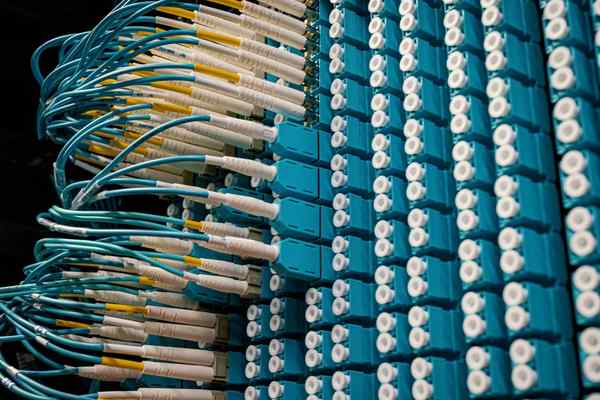
Fibre uses light travelling through thin glass strands to carry data. With fibre to the premises, often called FTTP or full fibre, the fibre line reaches the building itself. It can support very high download speeds, strong upload performance, and low latency. Actual speeds still depend on the plan and network conditions.
Watch for vague “fibre” marketing: a part-fibre service may use fibre to a street cabinet and older copper wiring for the final stretch. That difference can affect performance.
Cable Broadband
Cable internet commonly uses a hybrid network: fibre serves part of the neighbourhood, and coaxial cable carries data into the home. It often provides fast downloads where full fibre is unavailable. Upload speeds can be much lower than downloads, depending on the network and package.
Because customers may share local network capacity, busy periods can affect some cable connections. Compare expected speeds rather than assuming every cable package performs identically.
DSL Broadband
Digital subscriber line, or DSL, carries internet data over traditional telephone copper wires. ADSL and VDSL are examples, although their capabilities differ. DSL can use existing infrastructure, but achievable speed often falls as the copper line gets longer or conditions deteriorate.
DSL may still be useful where newer networks have not arrived. Check the speed estimated for your actual address, not a headline maximum quoted for an entire town.
Fixed Wireless, Mobile, and Satellite Broadband
Fixed wireless uses radio signals between a provider’s network and equipment at a property. Home 4G or 5G broadband uses mobile-network technology through a cellular router. These internet types can avoid a new wired line, although buildings, terrain, signal quality, and congestion influence performance.
Satellite broadband exchanges data with satellites through a dish or terminal. It can serve remote properties beyond terrestrial networks, but equipment, weather, network capacity, and satellite orbit can affect latency and consistency. Check data policies and equipment costs.
Understanding Broadband Speeds and Performance
Download and Upload Speed
Download speed measures how quickly data arrives, which matters for streaming, browsing, and downloading files. Upload speed measures how quickly you send data, which matters for video meetings, cloud backups, and sharing large files. Both are usually advertised in Mbps. A gigabit per second (Gbps) equals 1,000 Mbps.
Mbps means megabits per second, not megabytes per second. Since one byte contains eight bits, a 100 Mbps connection has a theoretical transfer rate of about 12.5 megabytes per second before overhead and real-world limitations.
Latency and Reliability
Latency is the delay between sending a request and receiving a response, measured in milliseconds. Lower latency makes gaming, voice calls, and other interactive activities feel responsive. A large download-speed figure cannot compensate fully for high latency, packet loss, or frequent interruptions.
How Much Broadband Speed Does a Home Need?
Consider a household where one person works on video calls, another streams a film, and a third downloads a game. A connection around 100 Mbps download may work for many such homes, provided upload capacity, latency, and Wi-Fi coverage are adequate. A larger household making heavy simultaneous use of cloud services may benefit from faster service, particularly higher uploads.
Rather than buying the biggest number available, compare expected download and upload speeds, monthly price, contract terms, installation charges, data limits, and reliability at your address. Run a speed test over Ethernet, if possible, to check broadband separately from Wi-Fi. Testing near the router and in distant rooms can reveal whether the real problem is wireless coverage.
Understanding internet speed tests, what a router does, and the difference between fibre and cable makes plan comparisons easier.
Frequently Asked Questions
Is Broadband the Same as the Internet?
No. The internet is the global network connecting services and devices. Broadband is one way to access it. Your broadband subscription gives you a route onto that network.
Is Broadband the Same as Wi-Fi?
No. Broadband is the internet service entering your home, while Wi-Fi is a local wireless connection to your router. Devices can also use broadband through an Ethernet cable.
What Is Considered High-Speed Broadband?
It depends on the country and the standard being discussed. For its 2026 fixed-network assessment, the U.S. FCC used 100 Mbps download and 20 Mbps upload. Those figures are not a universal legal definition or a promise about an individual plan.
Can You Get Broadband Without a Telephone Line?
Yes. Full-fibre, cable, fixed wireless, mobile broadband, and satellite services can all provide an internet connection without a traditional copper telephone line. Availability depends on your address.
The Bottom Line
Broadband keeps a home connected to the internet, but the delivery method shapes the experience. Fibre, cable, DSL, and wireless services have different strengths and limitations. Look beyond the advertised download figure: upload capacity, latency, local coverage, and dependable service matter just as much when choosing the right broadband plan.