
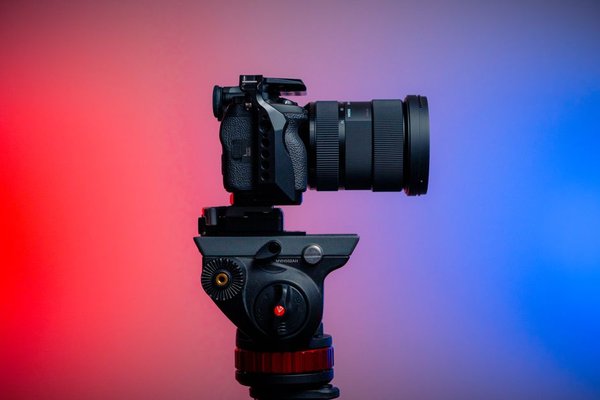
A tripod looks simple until you compare the specifications. Two models might have similar heights and weight ratings, yet one holds a camera steady during a long exposure while the other struggles with a heavy lens or smooth video movement. The difference often comes down to details that are easy to overlook: head design, leg construction, tube diameter, center column height, and how the equipment’s weight is distributed.
Understanding camera tripod features makes it easier to separate useful engineering details from impressive-looking numbers. A higher load rating does not automatically mean better stability, and a lighter tripod is not necessarily a weaker one. The right support system depends on your camera setup, shooting conditions, and the movements you need to make.
This guide explains what common tripod specifications mean, how they affect real-world performance, and which features deserve the most attention before choosing camera support equipment.
Tripod Heads: How Your Camera Moves and Locks in Place
The tripod head connects your camera to the legs and controls how it moves. Different tripod head types suit different shooting techniques, so the best choice depends on whether you need quick framing, precise adjustments, or controlled video movement.
Ball Heads for Fast Photography Adjustments
A ball head uses a spherical joint that allows the camera to tilt and rotate in multiple directions. Loosening a locking knob lets you reposition the camera quickly, while tightening it secures the chosen composition.
Ball heads are popular for travel, landscapes, and general photography because they are compact and relatively quick to operate. Better models may include adjustable friction, helping prevent a heavy camera from suddenly dropping when the main lock is released.
The main limitation is precision. Adjusting one direction can unintentionally change another, making careful architectural framing or small composition corrections more difficult.
Pan-Tilt and Geared Heads for Precise Composition
A pan-tilt head separates horizontal and vertical movement into independently controlled axes. Three-way heads also provide a separate adjustment for camera orientation, making them useful for architecture, product photography, and carefully aligned compositions.
Geared heads take precision further by using mechanical controls for incremental adjustments. They are particularly useful when straight lines and exact framing matter more than setup speed.
The trade-off is additional weight, bulk, and slower operation compared with a basic ball head.
Fluid Heads for Smooth Video Movement
Video work often requires smooth, repeatable panning and tilting rather than simply holding the camera still. Fluid heads use resistance mechanisms designed to reduce abrupt movement during these adjustments.
Some fluid heads offer adjustable drag and counterbalance. Drag controls movement resistance, while counterbalance helps support the camera as it tilts, reducing the tendency to fall forward or backward.
For video, these specifications can matter more than the head’s maximum supported weight. A fluid head that supports the camera but lacks suitable counterbalance may still be difficult to operate smoothly.
Gimbal Heads for Large Telephoto Lenses
Gimbal heads are designed to balance camera and lens combinations around their center of gravity. When properly adjusted, they allow heavy telephoto lenses to move with relatively little effort.
This design is particularly useful for wildlife and sports photography, where tracking moving subjects requires frequent changes in direction.
Camera Tripod Legs: Sections, Diameter, and Locking Systems
Camera tripod legs provide the structural foundation. Their construction influences vibration, adjustment speed, packed size, and how confidently the tripod supports equipment on uneven ground.
Leg Sections and Tube Diameter
Most photography tripods use three, four, or five telescoping sections per leg. Additional sections generally allow the tripod to collapse into a shorter package, making transportation easier.
However, more sections also introduce additional joints and typically require thinner lower tubes. This can reduce rigidity, particularly when the legs are fully extended.
- Three-section legs: Often offer greater rigidity and fewer joints but may be longer when folded.
- Four-section legs: Provide a practical balance between portability and structural support.
- Five-section legs: Usually pack smaller, although their narrow lower sections can be more vulnerable to flexing.
Tube diameter is another useful specification. All else being equal, larger-diameter tubes generally resist bending better than smaller ones. Comparing leg diameter alongside section count gives a more meaningful picture than either specification alone.
Twist Locks Versus Flip Locks
Tripod legs commonly use twist locks or flip locks to secure their telescoping sections.
Twist locks use rotating collars and often create a streamlined design without protruding levers. Flip locks use external clamps that provide an obvious visual indication of whether a section is secured.
Neither mechanism is automatically superior. Manufacturing quality, adjustment, maintenance, and resistance to dirt can influence reliability. Whichever style you choose, test whether the locks hold securely without requiring excessive force.
Independent Leg Angles
Tripods with independently adjustable leg angles can position each leg differently. This makes them more adaptable on stairs, slopes, rocky surfaces, and other uneven locations.
Wider leg angles also help lower the camera for ground-level compositions. However, extremely wide positioning requires enough space and careful placement to avoid creating a slipping hazard.
Carbon Fiber Versus Aluminum: What Material Changes
A carbon fiber tripod generally offers good stiffness relative to its weight, making it attractive for photographers who carry equipment over long distances. Carbon fiber construction can also provide favorable vibration-damping characteristics, although actual performance depends heavily on tube design and overall construction.
Aluminum tripods are usually more affordable and can deliver excellent rigidity, particularly when transportation weight is not a major concern.
The comparison is not simply about which material is stronger. Consider these practical differences:
- Carrying weight: Carbon fiber often reduces the weight of a similarly designed tripod.
- Cost: Aluminum generally offers better value for photographers working within a limited budget.
- Vibration behavior: Materials behave differently, but joints, tube dimensions, and tripod geometry also affect vibration.
- Damage considerations: Aluminum may bend under an impact, while carbon fiber composites can crack or suffer structural damage.
A poorly designed carbon fiber model can perform worse than a well-built aluminum tripod. Material should be evaluated alongside construction quality rather than treated as a guarantee of stability.
Working Height, Minimum Height, and Center Columns
Maximum tripod height is useful, but manufacturers may measure it with the center column fully extended. That distinction matters because the center column usually provides less rigidity than the main leg structure.
For more dependable support, look at the tripod’s height with the center column lowered. Ideally, this should position the camera at a comfortable working level without requiring you to extend every component.
Minimum height matters for macro photography, low-angle landscapes, and close-to-ground compositions. Some tripods allow their legs to spread nearly flat, while others offer reversible or removable center columns.
When Should You Extend the Center Column?
Use the center column when the additional height is genuinely necessary, such as shooting over a barrier or adjusting framing in a crowded environment.
For long exposures, heavy lenses, or windy conditions, keeping it lowered is generally preferable. An extended center column increases leverage and can make the camera more susceptible to movement.
A horizontal center column can be useful for overhead product photography, but positioning the camera away from the tripod’s central axis also increases tipping risk. The legs must be arranged to support the offset load.
Tripod Feet and Ground Contact
Even strong legs cannot compensate for insecure contact with the ground. Tripod feet determine how effectively the support system grips different surfaces.
- Rubber feet: Suitable for indoor flooring, pavement, and many everyday surfaces.
- Metal spikes: Can improve grip on suitable soft ground but may damage flooring and are unsuitable for many indoor locations.
- Interchangeable feet: Allow photographers to adapt the tripod to changing terrain.
On a hillside, placing one leg uphill and distributing the remaining legs carefully can improve support, provided all feet remain securely planted. Avoid positioning a tripod where a foot can slide or sink unexpectedly.
Understanding Tripod Load Capacity
Tripod load capacity describes the amount of weight a manufacturer states its equipment can support. Unfortunately, there is no universally applied consumer testing method that makes every manufacturer’s rating directly comparable.
A tripod rated for 10 kilograms is not necessarily twice as stable as one rated for 5 kilograms. The rating may indicate static load support rather than resistance to vibration, twisting, or movement caused by an unbalanced camera.
Why Weight Distribution Matters
Imagine a camera weighing 1 kilogram paired with a 2-kilogram telephoto lens. Although the combined weight is only 3 kilograms, the long lens can create considerable leverage when the camera is tilted or the equipment is mounted away from its center of gravity.
The same weight concentrated closer to the tripod’s central axis may be easier to stabilize.
For this reason, check both tripod and head load ratings separately. Remember to include the camera, lens, battery grip, microphone, monitor, mounting hardware, and other accessories when calculating the total equipment weight.
Choose a sensible capacity margin rather than operating continuously at the published limit. However, an unusually high advertised rating should never replace an assessment of rigidity and balance.
Quick-Release Plates and Mounting Compatibility
A quick-release system lets you attach and remove the camera without repeatedly threading it onto the tripod head.
Arca-Swiss-style dovetail systems are widely used in photography, but dimensions and safety mechanisms can vary between manufacturers. Compatibility should be verified rather than assumed.
Video heads often use longer sliding plates that help adjust the camera’s balance. Some also include safeguards against accidental plate removal.
If you regularly switch between a tripod, monopod, and handheld shooting, using compatible mounting systems can simplify your workflow. Our camera support equipment guide provides a useful starting point for understanding related accessories.
A Practical Stability Test Before Choosing a Tripod
Specifications are helpful, but a simple hands-on test can reveal weaknesses that numbers cannot.
Suppose you regularly photograph city skylines at night using a camera and a 200mm lens. Extend the tripod to your intended shooting height, keep the center column lowered, and mount your actual equipment.
Then perform these checks:
- Check framing movement: Lock the head and observe whether the camera slowly shifts downward.
- Check vibration: Magnify the live-view image, gently tap the camera, and observe how quickly the visible movement settles.
- Check leg rigidity: Look for excessive flex or movement around the leg joints.
- Check balance: Make sure the equipment does not place excessive sideways leverage on the head or legs.
- Check usability: Adjust the height and camera position while wearing the gloves or accessories you normally use.
This test is especially valuable at longer focal lengths, where small movements become more noticeable. For additional techniques, see long exposure photography settings.
Matching Tripod Features to Your Shooting Style
A travel photographer may prioritize folded length, low carrying weight, and a compact ball head. A studio product photographer may prefer wider legs, adjustable working height, and a geared head for precise framing.
Wildlife photographers using large lenses often benefit from a rigid tripod combined with a properly balanced gimbal head. Video creators should pay particular attention to fluid drag, counterbalance range, and mounting plate adjustment.
For mixed photography and video work, interchangeable heads can be more practical than expecting one head design to handle every movement equally well. Our camera video setup basics guide explores additional considerations for building a versatile shooting system.
The most useful tripod is the one that remains stable at your normal working height, supports your actual equipment, and allows the movements your photography requires.
Frequently Asked Questions
What are the most important camera tripod features?
Head type, leg rigidity, working height, locking mechanisms, load capacity, and mounting compatibility are among the most important. Their relative priority depends on your equipment and shooting style.
Is a carbon fiber tripod always better than aluminum?
No. Carbon fiber often provides a useful weight advantage, but aluminum can offer excellent stability at a lower cost. Construction quality and leg dimensions matter as much as material choice.
How much tripod load capacity do I need?
Calculate the combined weight of your camera, heaviest lens, and accessories, then choose equipment with a comfortable margin above that weight. Consider balance, head capacity, and rigidity rather than relying on the numerical rating alone.
Are more tripod leg sections better?
More sections generally improve portability by reducing folded length. Fewer sections often provide a simpler, potentially more rigid structure. The best option depends on how frequently you travel and how much stability you require.
Choosing Stability Over Specifications
A reliable tripod is more than a set of impressive numbers. Its head should control movement predictably, its legs should resist unwanted flex, and its height should suit your work without unnecessary compromises.
Compare support systems using realistic shooting conditions rather than maximum specifications alone. When head performance, structural rigidity, balance, and portability work together, a tripod becomes a dependable part of your camera setup instead of another source of frustration.