
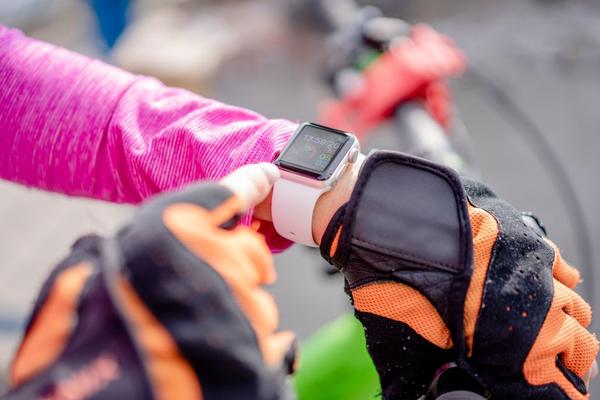
A fitness tracker for cycling should do more than count calories while you pedal. It needs to capture the ride reliably, show useful training information and survive the distance between charging stops. The right choice depends on whether you want a simple record of weekend rides, structured fitness data or navigation on unfamiliar roads.
Start With the GPS: Built-In or Phone-Connected?
For outdoor riding, GPS is usually the first specification worth checking. A tracker with built-in satellite positioning can record your route, speed and distance without using your phone for location data. A model with connected GPS depends on a paired phone, which may be inconvenient if you prefer to leave it at home.
Look beyond the phrase “GPS supported.” Confirm that the device records cycling activities independently and saves a route map. Some cycling GPS wearable models also offer multi-band positioning, which may improve tracking in difficult environments, although performance still varies by device and surroundings.
Route Recording Is Not the Same as Navigation
Most riders benefit from a clear post-ride map showing where they went, how far they travelled and how their pace changed. That is route recording. Navigation is different: it might mean following a preloaded line, getting turn prompts or viewing detailed offline maps.
If you always ride familiar roads, basic recording may be enough. For touring or exploring, check whether the tracker supports downloadable routes, off-course alerts and maps that work without mobile coverage. A watch that records your ride beautifully may still be poor at guiding you through a junction.
Heart Rate Tracking: Convenient, but Not Infallible
A wrist-based heart rate tracker for cycling can help you compare easy rides with harder efforts and understand how your body responds to climbs. Many devices also display heart rate zones, which are more useful for pacing than a calorie estimate alone.
There is a catch. Gripping handlebars, road vibration, cold skin and a loose watch fit can affect optical readings. For casual training, wrist measurements may be sufficient. If you rely on precise heart rate during intervals, choose a tracker that can pair with a compatible chest strap.
Battery Life Must Be Measured in GPS Hours
A watch advertised with a week of battery life may last much less time while continuously recording an outdoor ride. Compare the manufacturer’s stated GPS workout endurance, not just everyday smartwatch battery life.
Think about your longest realistic outing. A commuter recording 40 minutes each way has different needs from someone riding for six hours on Saturday. Allow extra battery headroom for navigation, a bright screen, connected accessories and ageing battery capacity. Also check whether any battery-saving mode reduces GPS recording frequency or disables features you want.
If you do multi-day trips, straightforward charging and a reliable low-battery warning can be more valuable than a collection of rarely used training metrics.
Look for Cycling-Specific Workout Features
Not every wearable treats cycling as more than a generic cardio session. A useful bike ride tracker should offer a dedicated outdoor cycling profile, with distance, elapsed time, moving time, average speed and an accessible ride history.
Extra sensors may matter later
Cadence measures pedal revolutions per minute, while a power meter reports cycling power in watts. Those metrics generally need compatible external sensors; they do not automatically appear just because a watch has GPS. Check the exact device’s Bluetooth or ANT+ sensor support, including which sensor types it accepts.
Indoor cyclists should also verify that the tracker has an indoor cycling mode. GPS cannot measure useful indoor distance by itself, and accurate speed or distance may depend on a compatible trainer or sensor.
Water Resistance, Controls and Ride-Day Comfort
Cycling equipment regularly faces rain, sweat and roadside grit. Check the manufacturer’s actual water-resistance rating and care guidance rather than assuming “waterproof” means unrestricted use. Water resistance can also change with wear or damage.
Buttons are often easier to operate than touchscreens with wet fingers or gloves. The display should remain legible in daylight, and the strap should stay secure without pinching when your wrist bends over the bars. Test the fit in a riding position if possible.
Can a Wrist Tracker Replace a Bike Computer?
For basic activity logging, absolutely. A watch can be enough if your priorities are recording a GPS route, reviewing speed and distance afterward and tracking general fitness. It also moves easily between cycling, walking and other workouts.
A dedicated bike computer has advantages when you need continuous at-a-glance data, large route maps, long navigation sessions or connections to several cycling sensors. Its handlebar position is more practical for checking information without twisting your wrist. Some watches can broadcast data to other devices, but compatibility varies.
If you are comparing setups, a guide to cycling watches versus bike computers can help you avoid paying twice for the same basic tracking functions.
How to Choose Without Overspending
Rather than shopping by brand first, match the features to your rides. A casual cyclist should prioritise reliable GPS, comfort and clear activity summaries. Someone training regularly may value heart rate zones, chest-strap compatibility and structured workouts. A long-distance rider should put GPS battery life and offline navigation ahead of decorative smartwatch features.
Check the companion app before purchasing. Can you inspect routes, export activity files and sync with the training service you already use? Some advanced reports or features may require subscriptions. Review the complete cost, including any straps or sensors you expect to add. A guide to choosing a fitness watch for your sport can help narrow the options.
Try this practical buying test
Imagine a three-hour ride with a wooded section, two café stops and one unfamiliar turn. Ask whether the watch can record the full route, pause sensibly at stops, display the metrics you care about and retain enough battery to get home. If you need directions, verify that they work without a phone signal. That scenario exposes limitations a specification sheet can hide.
Frequently Asked Questions
Is built-in GPS necessary for cycling?
Not if you always carry a compatible phone and do not mind connected GPS. Built-in GPS is the better fit for riders who want to record routes independently.
Can a fitness tracker measure cycling cadence?
Some can, when paired with a supported cadence sensor or compatible trainer. Check the model’s sensor compatibility; built-in GPS alone does not measure pedal cadence.
Are cycling calorie estimates accurate?
They are approximations, influenced by algorithms and the quality of heart rate and personal profile data. Use them to observe broad patterns, not as an exact measure of energy expenditure.
Will a cycling tracker work without my phone?
A device with standalone GPS and on-device workout storage can usually record rides without one. Phone-free maps, music, sensor pairing and syncing depend on the specific model.
Choose the Features You Will Actually Use
The best fitness tracker for cycling is the one that accurately captures your usual rides and makes the data easy to use. Prioritise independent GPS if you ride phone-free, dependable battery endurance for longer sessions and compatible heart rate or cycling sensors when training gets more serious. Everything else should earn its place on your wrist.