
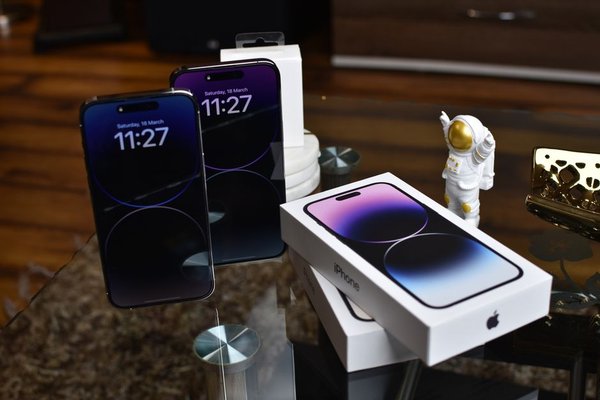
Choosing between the Pixel 10 Pro XL and iPhone 17 Pro is less about finding one “best” phone and more about deciding which compromises fit your daily life. Google gives you a larger screen, deeper Gemini integration, ambitious computational photography, and a big battery. Apple answers with a compact design, exceptional video tools, strong performance, and integration with Macs, Apple Watches, and AirPods.
For Android-first buyers, the Pixel is more flexible. For established Apple users, creators, and anyone who prefers a smaller flagship, the iPhone is safer.
Quick Verdict: Which Phone Should You Buy?
Buy the Pixel 10 Pro XL if you want a 6.8-inch display, Google’s most advanced AI features, long-range camera tools, a 5,200mAh battery, and 16GB of RAM. It is especially appealing for people who rely heavily on Gmail, Google Photos, Calendar, Maps, and Gemini.
Buy the iPhone 17 Pro if you want flagship power in a manageable 6.3-inch body, consistently strong video features, fast charging, and seamless Apple integration. Its A19 Pro chip, ProRes RAW support, Apple Log 2, and USB 3 transfer speeds make it a practical creative tool.
Design and Display: Big-Screen Pixel or Compact iPhone?
The Pixel uses a 6.8-inch LTPO OLED display, while the iPhone has a 6.3-inch OLED panel. Both support adaptive refresh rates up to 120Hz, always-on functionality, HDR, and high outdoor brightness. Google rates the Pixel at up to 3,300 nits peak brightness, while Apple lists up to 3,000 nits outdoors.
The Pixel’s larger canvas is better for reading, gaming, editing, and video. The trade-off is weight: about 232 grams versus roughly 206 grams for the iPhone. Buyers who dislike oversized phones should take “XL” seriously.
Performance: Tensor G5 Meets A19 Pro
The Google Tensor G5 is designed around Pixel-specific AI, photography, security, and everyday responsiveness. Paired with 16GB of RAM, it gives the Pixel headroom for multitasking and on-device Gemini features.
Apple’s A19 Pro combines a six-core CPU, six-core GPU, neural accelerators, hardware ray tracing, and a 16-core Neural Engine. For demanding games, video editing, and professional camera workflows, the iPhone has the stronger performance case. Vapor-chamber cooling helps maintain speed under load.
Camera Comparison: Photos, Zoom, and Video
The Pixel has a 50MP main camera, 48MP ultrawide with macro support, and a 48MP 5x telephoto camera. Google offers optical-quality options from 0.5x through 10x, plus Pro Zoom up to 100x. Camera Coach can suggest framing and composition, while Google Photos supports conversational editing.
The iPhone uses three 48MP rear cameras. Its telephoto system provides 4x and 8x optical-quality options, with digital zoom up to 40x. Apple also includes an 18MP Center Stage front camera with automatic framing and Dual Capture.
For still photography, the Pixel is the more adventurous option. Its long zoom range and AI editing suit travel scenes, pets, landmarks, or distant subjects. The iPhone is the stronger video camera, with 4K Dolby Vision at high frame rates, ProRes RAW, Apple Log 2, advanced stabilization, Audio Mix, and four studio-quality microphones.
For example, a parent photographing a school performance from the back of an auditorium may prefer the Pixel’s 5x lens. A creator filming interviews or product clips will probably get more production flexibility from the iPhone.
AI Assistants: Gemini Is More Proactive
AI is where the iPhone vs Pixel difference feels most pronounced. Tensor G5 and Gemini Nano power Magic Cue, Camera Coach, conversational photo editing, Circle to Search, and cross-app assistance, making AI central to the Pixel experience.
Apple Intelligence is integrated across iOS for writing, image creation, visual intelligence, and Siri features, with a strong emphasis on privacy. It is useful, but the Pixel’s AI feels more visible and proactive. Some tools on both platforms depend on language, country, account type, and software version, so USA buyers should confirm the features they plan to use.
Battery Life and Charging
Google equips the Pixel with a typical 5,200mAh battery and rates it for more than 24 hours of general use. It can reach up to 70% in about 30 minutes with a compatible 45W USB-C PPS charger. Pixelsnap wireless charging supports Qi2 magnetic alignment at up to 25W.
Apple does not publish battery capacity, but rates the iPhone 17 Pro for up to 33 hours of video playback. With a suitable 40W or higher adapter, it can reach 50% in about 20 minutes. MagSafe and Qi2 wireless charging reach up to 25W. Because the companies use different test methods, those figures are not directly comparable.
Software, Ecosystem, and Switching Costs
The Pixel offers a clean Android experience, extensive customization, deep Google integration, and seven years of operating system and security updates. Qi2 magnetic support also broadens its accessory options.
The iPhone’s advantage is continuity. AirDrop, iMessage, FaceTime, Apple Watch pairing, iCloud Photos, AirPods switching, and Mac integration can save time. Switching may mean replacing paid apps or changing family communication habits.
List the five services you use most. If four are Apple services, the iPhone is probably worth the ecosystem premium. If your life revolves around Google apps or you want more control over defaults and interface behavior, the Pixel is the better match.
Price and Value for USA Buyers
At launch, the Pixel 10 Pro XL started at $1,199 with 256GB, while the iPhone 17 Pro started at $1,099 with 256GB. Promotions, carrier deals, and trade-in credits can reverse that comparison, so the final checkout price matters more than the headline price.
Compare both phones at the same storage level and carrier conditions. The Pixel delivers more screen, a larger published battery, and more aggressive AI. The iPhone offers a smaller form factor, stronger video, and easier ownership for existing Apple users.
Frequently Asked Questions
Is the Pixel 10 Pro XL better for photos?
The Pixel is the more versatile choice for computational still photography, AI-assisted editing, and long-distance zoom. The iPhone is more balanced for users who want excellent photos and advanced video tools in one device.
Which phone is better for gaming?
The iPhone 17 Pro is the stronger choice for demanding games because of the A19 Pro chip, hardware ray tracing, and cooling system. The Pixel handles mainstream games well but is more clearly optimized around AI and camera processing.
Which phone has better battery life?
The Pixel has the larger published battery and is designed for heavy all-day use. Apple’s video-playback rating is also strong, but real results depend on brightness, signal quality, camera use, gaming, and AI features.
Is switching from iPhone to Pixel difficult?
Contacts, photos, calendars, and many messages can be transferred during setup. The harder part is leaving Apple-only services, paid apps, Apple Watch compatibility, and habits built around iMessage or FaceTime.
Final Recommendation
The Pixel 10 Pro XL is better for big-screen Android fans, Google-service users, photographers, and anyone eager to use proactive Gemini features. The iPhone 17 Pro suits Apple users, mobile filmmakers, serious gamers, and buyers who want flagship capability without an oversized phone.
Choose the Pixel for AI, display size, battery capacity, and zoom. Choose the iPhone for video, performance, compactness, and ecosystem convenience. That is the decision behind the Pixel 10 Pro XL vs iPhone 17 Pro comparison.