
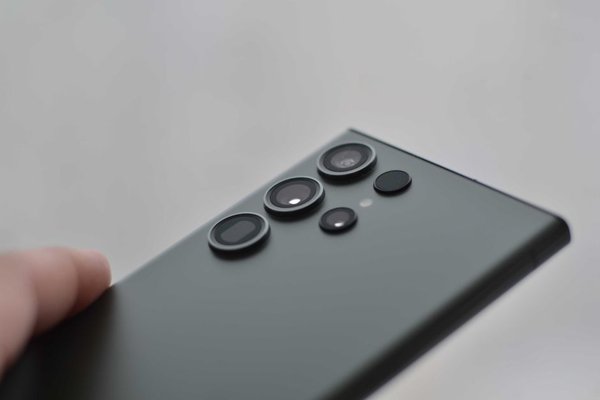
The Galaxy S26 Ultra is not a dramatic reinvention of Samsung’s largest flagship. It is a focused upgrade built around three things buyers notice every day: a more flexible camera, longer battery life, and AI tools that can reduce small bits of friction. The result is a polished Samsung flagship for 2026, though its $1,299 starting price demands careful consideration.
For people coming from a Galaxy S23 Ultra or an older phone, the changes add up quickly. Owners of the S25 Ultra will see fewer reasons to trade in because the core experience remains familiar. This review covers the Galaxy S26 Ultra specs, camera results, battery testing, AI features, and the compromises USA buyers should understand.
Design and display feel refined, not redesigned
The phone is 7.9mm thick and weighs 214 grams, making it slightly thinner and lighter than the S25 Ultra. Rounded corners improve comfort, while the 6.9-inch Dynamic AMOLED 2X display remains sharp and smooth with a 1Hz-to-120Hz adaptive refresh rate. The built-in S Pen is still included, and IP68 water and dust resistance adds practical reassurance.
The standout feature is Privacy Display. It limits what people can see from the side and can activate for selected apps, notifications, or sensitive screens. That is useful when checking banking or work messages in public. Straight-on image quality remains strong, although the narrower off-angle view is noticeable.
The raised camera module makes the phone wobble on a desk, but a case largely solves that. Samsung also omits built-in Qi2 magnets, so magnetic charging stands and accessories require a compatible case.
Galaxy S26 Ultra camera review
The rear system combines a 200MP main camera, 50MP ultrawide, 50MP 5x telephoto, 10MP 3x telephoto, and 12MP selfie camera. Wider apertures on the main and 5x cameras allow more light to reach the sensors, which matters more than another headline megapixel increase.
Daylight photos and zoom
In good light, the main camera captures crisp detail, strong contrast, and the saturated color style many Samsung users enjoy. Skin tones are improved, but bright scenes can still produce slightly overexposed highlights. Processing occasionally pushes reds, yellows, and blues beyond natural levels, so users who prefer neutral color may want to reduce optimization in the camera settings.
Zoom remains one of the clearest reasons to choose this phone. The 3x and 5x lenses provide useful framing, while 10x images retain impressive detail. Higher digital zoom levels are best for reading a distant sign or identifying a subject rather than creating print-ready photos. Even so, the S26 Ultra is more versatile at long distances than most phones officially sold in the United States.
Low-light photos and video
Independent comparisons show a visible improvement in dim scenes. The wider main aperture produces brighter indoor photos with more usable detail, while the 5x camera performs better after sunset than its predecessor. Noise is reduced, although competing flagships may produce more natural colors or stronger macro detail.
Video gains Horizontal Lock, which keeps the horizon level even when the phone rotates or the person filming moves awkwardly. Imagine recording a child riding a bicycle while jogging beside them; the feature can keep the footage watchable despite uneven hand movement. Low-light video is also brighter and cleaner, though some rivals deliver more restrained daylight color.
Battery life and charging results
Samsung kept the 5,000mAh battery, but efficiency has improved. In a standardized 5G web-browsing test, the Galaxy S26 Ultra lasted 16 hours and 10 minutes, compared with 14 hours and 27 minutes for the S25 Ultra in the same updated test. That is strong all-day endurance.
Heavy camera use, navigation, gaming, maximum brightness, and QHD+ resolution will reduce that margin. A practical setup is to keep adaptive refresh enabled but use the default FHD+ resolution unless the extra sharpness is genuinely noticeable. This preserves smooth scrolling while stretching battery life during travel or long workdays.
Wired charging rises to 60W, reaching roughly three-quarters charge in about 30 minutes with suitable equipment. Wireless charging is faster too, but a charger is not included and magnetic positioning requires a Qi2-compatible case.
AI features: useful ideas mixed with limitations
The Snapdragon 8 Elite Gen 5 for Galaxy provides fast performance and stronger neural processing. Apps open quickly, demanding games run smoothly, and the larger vapor chamber helps sustain speed. The software combines Galaxy AI, Gemini, Bixby, Perplexity, Circle to Search, and enhanced photo editing.
Now Nudge can recognize context in messages and surface a calendar shortcut or relevant photos. Photo Assist accepts written instructions for edits, while Audio Eraser can reduce distracting background sound in videos. Gemini-powered app actions aim to complete multi-step tasks such as arranging a ride or building an order, but results can vary and purchases still require confirmation.
The best approach is selective use. Enable features that solve a real problem and disable those that create clutter. Related reading opportunities include our best Android phone guide, Samsung Galaxy AI guide, and camera phone comparison.
Is it the best Android phone for USA buyers?
The Galaxy S26 Ultra starts at $1,299.99 with 256GB of storage and 12GB of RAM. Options rise to 512GB and 1TB, with the 1TB version receiving 16GB of RAM. Samsung promises seven generations of operating-system upgrades and seven years of security updates, supporting a long useful life.
It is an excellent choice for buyers who want top-tier zoom, an integrated stylus, a large display, long support, and broad productivity features. It is less convincing for people who dislike oversized phones, want native magnetic charging, or already own an S25 Ultra. Some competitors offer larger batteries or more natural camera processing for less money.
Frequently asked questions
How long does the Galaxy S26 Ultra battery last?
Independent testing recorded 16 hours and 10 minutes of continuous 5G web browsing at controlled brightness. Real-world endurance varies, but most users should expect a full day, with lighter users potentially stretching into a second day.
Does the Galaxy S26 Ultra have a better camera than the S25 Ultra?
Yes, particularly in low light. Wider apertures improve brightness on the main and 5x cameras, while zoom and stabilized video remain major strengths. The difference is meaningful but may not justify upgrading for every S25 Ultra owner.
Does it support Qi2 magnetic charging?
It supports faster wireless charging, but magnets are not built into the phone. A compatible magnetic case is required for Qi2-style alignment and accessories.
Is the Galaxy S26 Ultra worth upgrading to?
It is a strong upgrade from an S23 Ultra or older model. From an S25 Ultra, the better battery efficiency, Privacy Display, low-light camera gains, and faster charging are useful but not transformative.
Final verdict
The Galaxy S26 Ultra earns its flagship status through balance rather than one spectacular specification. Its camera system is exceptionally versatile, battery life is stronger, performance is effortless, and Privacy Display feels immediately practical. AI tools remain uneven, and the lack of native Qi2 magnets is frustrating at this price. Even so, for USA buyers seeking a premium big-screen Android phone with an S Pen and long software support, it is one of the most complete options of 2026.