
Samsung’s Ultra phones rarely need dramatic reinvention. They succeed by combining a huge display, serious cameras, an integrated S Pen, top-tier performance, and nearly every software feature Samsung can fit into one device. The Galaxy S26 Ultra follows that formula, but its most memorable upgrade is the built-in Privacy Display, a genuinely useful feature that makes the screen much harder to read from an angle.
The rest of the package is evolutionary: brighter low-light photography, faster charging, stronger processing, improved cooling, and more AI tools. For buyers comparing the Samsung flagship 2026 lineup, the question is whether those changes justify the $1,299.99 starting price.
Design and display: refined and more private
The Galaxy S26 Ultra remains large, but rounded corners and a 7.9mm, 214g body make it easier to hold than older, sharper Ultra models. The built-in S Pen is still valuable for notes, signatures, precise photo edits, and remote camera control.
The 6.9-inch Dynamic AMOLED 2X display is bright, crisp, and well suited to video, gaming, editing, and multitasking. Samsung rates peak brightness at 2,600 nits, while the anti-reflective treatment helps outdoors. Privacy Display can reduce side-angle visibility across the full screen or activate for selected apps, notifications, and password fields. On a train or while checking a banking app in a queue, it solves a real problem without requiring a permanently dark privacy protector.
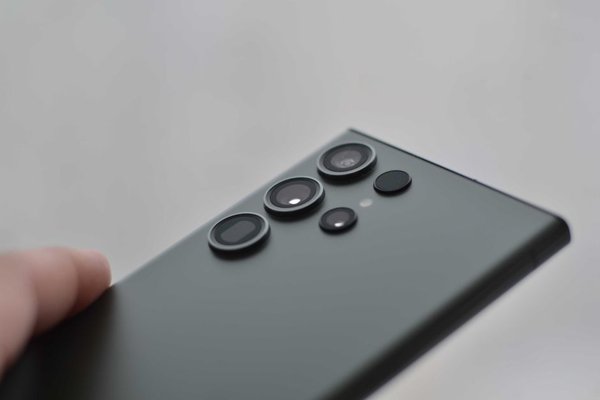
Maximum privacy mode can look slightly washed out, so selective use is best. The large camera island also makes the phone rock on a desk, although a case reduces the problem.
Galaxy S26 Ultra specs and performance
The US model uses the Snapdragon 8 Elite Gen 5 for Galaxy, paired with 12GB of memory on the 256GB and 512GB versions. The 1TB model increases memory to 16GB. Demanding games, 4K editing, split-screen apps, Samsung DeX, and rapid photo processing all run smoothly. A larger vapor chamber helps distribute heat during longer gaming or recording sessions.
The S26 Ultra feels consistently fast rather than impressive only in benchmarks. Buyers researching the best Android phone will find cheaper specialists, but few devices match this combination of power, camera flexibility, stylus support, and display quality.
Camera test: better light matters most
The rear system uses a 200MP main camera, 50MP ultrawide, 50MP 5x telephoto, and 10MP 3x telephoto. The important changes are wider apertures on the main and 5x cameras. The 200MP camera now uses f/1.4, while the 5x telephoto opens to f/2.9. More incoming light produces cleaner night scenes and sharper indoor shots without relying entirely on aggressive processing.
In daylight, the main camera delivers detailed images with strong dynamic range and Samsung’s familiar punchy presentation. The 3x lens is useful for portraits, while the 5x camera handles concerts, travel details, wildlife, and distant architecture well. The 10x “optical quality” option can be useful in good light, but 100x Space Zoom remains an occasional tool rather than a source of consistently natural photos.
At an evening school performance, for example, the main camera can capture the full stage while the 5x lens brings a child’s expression closer without moving through the audience. Movement and available light still matter, but the wider apertures improve the chance of a usable shot.
Video is another strength. Horizontal Lock within Super Steady can keep the horizon level even when the phone is rotated or moved aggressively. It works best in good light, making it useful for running clips, cycling footage, theme-park videos, and handheld travel shots.
Battery life and charging
The 5,000mAh battery looks conservative beside some rivals, but efficiency is strong. Heavy users should generally reach bedtime, while moderate users may stretch into a second day. Samsung advertises up to 31 hours of video playback, although real endurance varies with brightness, signal strength, camera use, gaming, and display resolution.
Wired charging rises from 45W to 60W, with Samsung claiming up to 75 percent in around 30 minutes under suitable conditions. The weakness is magnetic charging: the phone is Qi2 Ready rather than having built-in Qi2 magnets, so magnetic alignment and accessories require a compatible case.
Galaxy AI: useful tools mixed with clutter
The S26 Ultra combines Galaxy AI, Google Gemini, Bixby, and Perplexity, creating a broad but sometimes confusing selection of assistants. Photo Assist can remove, move, or replace objects using natural-language prompts. Audio Eraser reduces distracting background sound, while document scanning can straighten pages, remove fingers, and clean up creases.
Some proactive features are less dependable. Now Nudge is designed to suggest actions based on screen content, and task automation can prepare ride or food orders in supported apps. These tools may save time, but they can be slow, inconsistent, or limited by app support. AI is best treated as a convenience layer, not the main reason to spend more than $1,000.
Should you buy the Galaxy S26 Ultra?
The Galaxy S26 Ultra is one of the most complete Android phones available in 2026. It offers excellent performance, versatile cameras, strong battery life, faster charging, a superb display, an integrated S Pen, and a privacy feature that is more practical than many headline AI additions.
It makes the most sense for owners of a Galaxy S23 Ultra or older device, professionals who use the S Pen, frequent travelers, and mobile photographers. Galaxy S25 Ultra owners have less reason to upgrade unless Privacy Display, faster charging, or improved low-light performance solves a specific need. Buyers who prefer compact phones, native magnetic charging, or maximum battery capacity should compare alternatives first.
Frequently asked questions
Is the Galaxy S26 Ultra the best Android phone of 2026?
It is one of the strongest overall choices because few competitors combine this level of performance, cameras, display quality, S Pen support, battery life, and software features. The best choice still depends on whether a buyer values Samsung’s versatility more than a lower price or compact size.
How good is the Galaxy S26 Ultra camera at night?
Low-light results are better than on the previous model because the main and 5x cameras use wider apertures. Photos are generally brighter and cleaner, although moving subjects can still blur and Samsung’s processing may sometimes look stronger than natural.
Does the Galaxy S26 Ultra have a charger in the box?
Samsung does not normally include a wall charger with its flagship phones. To reach the fastest wired charging speed, buyers need a compatible 60W charger and suitable USB-C cable.
Is it worth upgrading from the S25 Ultra?
For most S25 Ultra owners, the upgrade is optional. Privacy Display, improved low-light lenses, faster charging, and newer processing are useful, but the core camera layout, battery capacity, and overall experience remain familiar.
Final verdict
The Galaxy S26 Ultra does not reinvent Samsung’s flagship formula, but it improves the parts people use every day. Privacy Display is the standout, the cameras are more dependable after dark, performance is effortless, and charging is quicker. Its price, size, camera bump, and missing built-in Qi2 magnets prevent a perfect score, yet the overall package remains exceptionally capable. For buyers who want one premium Android phone for work, entertainment, photography, and long-term ownership, the S26 Ultra is an easy recommendation.